
Vrat Katha — The Story of Pandava Nirjala Ekadashi
Source: Brahma-vaivarta Purana — conversation between Srila Vyasadeva and Bhimasena
Among the many Ekadashis, Pandava Nirjala Ekadashi holds a uniquely beloved place in the heart of every Vaishnava — and the reason lies in the touching exchange between the mighty Bhimasena and his grandsire-guru, Srila Vyasadeva, recorded in the Brahma-vaivarta Purana.
Bhimasena, the second of the Pandavas, was a devotee of Lord Krishna and a man of unmatched physical strength. Yet of all austerities, fasting was the one he could not bear. His elder brother Yudhishthira Maharaja, his mother Kunti-devi, his brothers Arjuna, Nakula and Sahadeva, and even Draupadi observed the Ekadashi vrata twice every month without difficulty. Yudhishthira repeatedly encouraged Bhima to follow suit. Bhima sincerely wanted to, but the "vrika-agni" — the wolf-like fire of hunger — burned constantly in his stomach. "I can give in charity," Bhima said, "I can worship Lord Keshava, but I simply cannot tolerate hunger even for the blink of an eye."
One day, summoning his courage, Bhima approached the great sage Srila Vyasadeva — knower of all the Vedas, compiler of the Puranas, and the spiritual master of the Pandavas. With folded hands he confessed his weakness and begged for a path that would still grant him the mercy of Sri Ekadashi. Vyasadeva first reminded him gravely: "O Bhima, anyone who eats on Ekadashi destroys his pious credits and walks toward hell. If you wish to attain the heavenly planets and avoid this fate, you must refrain from eating on both the Ekadashis of every month."
Bhima grew panic-stricken. "But great sage, fasting twice a month is impossible for me! Please give me some easier method by which I may yet please Lord Hari." Smiling at the helpless Pandava, Vyasadeva mercifully revealed a most confidential remedy. "During the waxing moon of the month of Jyestha, when the Sun is in Taurus or Gemini, there comes a single Ekadashi known as Nirjala — the waterless Ekadashi. On this one day of the year, observe a complete fast — without even taking a single drop of water — from sunrise on Ekadashi until sunrise on Dvadashi. Whoever successfully observes this single Nirjala vrata receives the full merit of having fasted on every Ekadashi of the entire year."
The sage instructed that one should perform only a token achamana with water no larger than a single mustard seed; anything more would amount to having drunk wine. Early on Dvadashi morning, after bathing, the devotee should give charity to brahmanas and only then break the fast in their company. Vyasadeva further explained that by this single fast, sins as enormous as Mount Sumeru or Mount Mandara are burnt to ashes like dry leaves. Bathing in all the sacred rivers, visiting all the holy tirthas, performing all yajnas — these are encompassed within the observance of this one day. At the time of death, the Yamadutas will not approach such a devotee; instead the Vishnudutas come with a celestial vimana and carry him to the spiritual abode.
Hearing this, Bhima rejoiced. He at once accepted the vow and resolved to observe Nirjala Ekadashi every year for the rest of his life. When he related the sage's words to his brothers, all the Pandavas — and Draupadi, who was already a faithful Ekadashi observer — joined him in the vrata. Because Bhima specifically resolved upon it and never broke it, the day is famously called Pandava Nirjala Ekadashi and also Bhimaseni Ekadashi.
Lord Krishna Himself declares in the Brahma-vaivarta Purana that any pious act — bathing in holy places, giving charity, chanting Vedic mantras, performing sacrifice — that is carried out on Nirjala Ekadashi is multiplied one billion times. Even hearing this katha with devotion carries the result of offering oblations to the forefathers during a solar eclipse at the conjunction of Amavasya and Pratipada. Such is the unfathomable glory of this brilliantly effulgent gem among Ekadashis.
Spiritual Significance
Nirjala Ekadashi is the one Ekadashi every Vaishnava aims to observe even if no other Ekadashi can be kept, because it gathers within itself the merit of all twenty-four Ekadashis of the year. It also tests and strengthens the devotee's determination — the symptom of advancement in bhakti, as Srila Rupa Goswami teaches in the Upadeshamrita, is the ability to control the urges of the tongue and belly.
Benefits of Observing Pandava Nirjala Ekadashi
- ✦Equal to observing all 24 Ekadashis of the year combined.
- ✦Any pious activity done on this day is multiplied one billion times.
- ✦Burns to ashes accumulated sins of many lifetimes.
- ✦At the time of death, the Vishnudutas come to escort the soul to Vaikuntha.
- ✦Grants the merit of bathing in all holy rivers and visiting all places of pilgrimage.
How to Observe
- Take sankalpa at sunrise to fast completely — without food and without water — until sunrise on Dvadashi.
- Spend the day in chanting of the Hare Krishna mahamantra, reading scriptures and hearing hari-katha.
- Attend mangala-arati and the full temple darshan schedule wherever possible.
- Stay awake the night of Ekadashi (jagaran) in kirtan and remembrance of Lord Hari.
- On Dvadashi morning, bathe, give charity to brahmanas/Vaishnavas, and break the fast within the Parana window with water first, then prasadam.
What to Avoid
- Any food, drink or even water during the Ekadashi tithi.
- Sleeping during the day, anger, gossip and offences to devotees.
- Onion, garlic, mushrooms and all tamasic items even during Dvadashi parana.
- Breaking the fast outside the Parana window.
- Devotees with health issues, the elderly, the very young or pregnant women should observe a phalahar (fruits & water) fast instead — under the guidance of a senior Vaishnava.
Recommended Bhajans & Prayers
Frequently Asked Questions — Pandava Nirjala Ekadashi
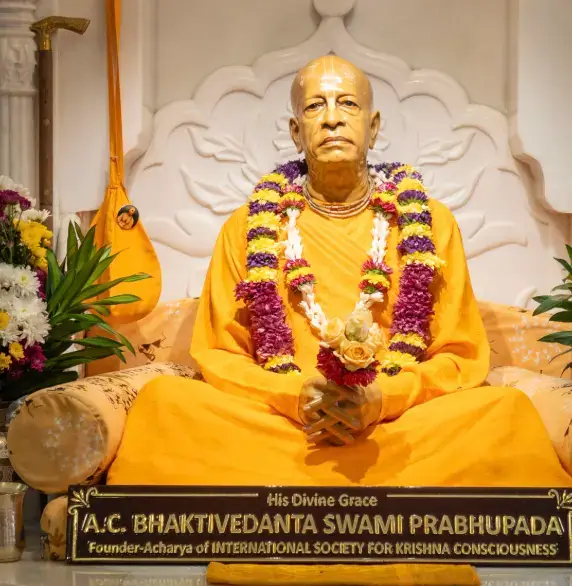
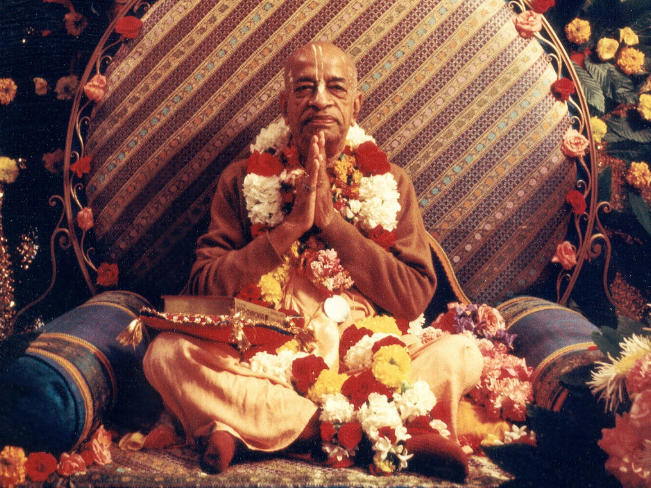
Gratitude to His Divine Grace A.C. Bhaktivedanta Swami Srila Prabhupada
We offer our humble obeisances at the lotus feet of our founder-acharya, His Divine Grace A.C. Bhaktivedanta Swami Srila Prabhupada, without whose causeless mercy the priceless prayers, bhajans and sacred literature of the Gaudiya Vaishnava tradition would have remained inaccessible to most of the world. By his herculean preaching efforts, his unparalleled translations and his founding of the International Society for Krishna Consciousness (ISKCON), the holy names, pastimes and instructions of Sri Sri Radha-Krishna and Sri Chaitanya Mahaprabhu are today chanted in every town and village.
nama om vishnu-padaya krishna-preshthaya bhu-tale
srimate bhaktivedanta-svamin iti namine
namas te sarasvate deve gaura-vani-pracharine
nirvishesha-shunyavadi-pashchatya-desha-tarine
All glories to Srila Prabhupada. All glories to the Vaishnava acharyas in the disciplic succession.