
Vrat Katha — The Story of Pausha Putrada Ekadashi
Source: Bhavishya-uttara Purana — narrated by Lord Sri Krishna to Maharaja Yudhishthira
Maharaja Yudhishthira once asked Lord Sri Krishna: "O Janardana, what is the name of the Ekadashi of the bright fortnight of Pausha, and what is its glory?" Lord Krishna replied: "This is the famous Pausha Putrada Ekadashi — the second Putrada Ekadashi of the year, after the one in Shravana. It is the day on which I, Sri Hari, fulfil the heartfelt prayers of My devotees who long for noble and dharmic offspring. To impress its glory upon you, listen to the story of King Suketuman of Bhadravati."
In the great city of Bhadravati there ruled a noble king named Suketuman. He was just, dharmic and generous; his queen Saibya was equally pious. The kingdom prospered, the brahmanas were honoured, the cows were protected, and dharma flourished. Yet one sorrow consumed the royal couple: although many years had passed, they had not been blessed with a child. Day after day they would offer fervent prayers, perform every prescribed sacrifice and feed every passing brahmana. No result came. The thought that all their wealth, kingdom and lineage would have no heir to continue the worship of their forefathers gave them no rest.
One day, unable to bear his sorrow any longer, King Suketuman quietly left his palace and rode alone into the deep forest. He wandered without direction, lost in thought, until at last his horse, exhausted, brought him to the banks of a beautiful lake. As he dismounted, he was astonished to find a charming ashrama on the lakeshore, inhabited by a group of radiant sages — the divine Vishvedevas, the protector-sages of dharma, who were performing their afternoon prayers.
The king bowed humbly before them. The Vishvedevas, seeing the royal visitor, said: "O king, who are you, and what brings you alone into this remote forest? Your face reveals a great sorrow." With folded hands the king narrated his entire predicament. The sages were moved. After a moment's reflection their leader spoke: "O great king, this very moment we sages are gathered for the bright Ekadashi of Pausha — the famous Putrada Ekadashi. Observe this Ekadashi with us today, with full devotion, and Lord Sri Vishnu will most certainly fulfil your heart's desire."
King Suketuman accepted with joy. He bathed in the holy lake, took sankalpa with the sages, fasted from grains and pulses, offered tulasi at the feet of Lord Vishnu, chanted His holy names through the day, kept jagaran with the sages through the night, and on Dvadashi broke his fast in their blessed company. The Vishvedevas then gave him their parting blessing: "O king, return to your palace. Within a short time the queen will conceive, and you will be blessed with a noble son who will be a great devotee of Sri Hari and a protector of dharma."
It happened exactly as the sages had foretold. Within months Queen Saibya conceived, and in due course she gave birth to a magnificent son. The boy grew into an extraordinary prince — strong, beautiful, learned, devoted to Lord Vishnu and beloved of his subjects. He became the joy of his parents, the protector of dharma in the kingdom, and a credit to the lineage of Bhadravati.
Lord Krishna concluded to Yudhishthira: "O king, this Putrada Ekadashi is most dear to those who sincerely long for noble offspring. But its scope is not merely material: 'Putrada' also means 'the giver of the qualities of a true child of God' — that is, the qualities of a pure devotee. Therefore even renounced devotees who have no thought of household life observe this Ekadashi, praying that they may become true children of Sri Hari. There is no Ekadashi in the cold month of Pausha greater than this one."
Spiritual Significance
Pausha Putrada Ekadashi is one of the two Putrada Ekadashis of the year (the other being Pavitropana Ekadashi in Shravana). It is specifically observed by couples praying for noble, dharma-following children, but its deeper meaning extends to every devotee who longs to develop the qualities of a true child of God. It is also one of the most auspicious days at the close of the Vedic year for taking up new vows of bhakti.
Benefits of Observing Pausha Putrada Ekadashi
- ✦Fulfils the heartfelt prayer for noble, dharma-following children.
- ✦Bestows the qualities of a true child of God upon the devotee.
- ✦Removes the karmic obstructions to family life and lineage.
- ✦Merit equal to performing many Vedic sacrifices.
- ✦Most auspicious day to take up new vows of bhakti at the close of the year.
How to Observe
- Rise early, bathe, take sankalpa to fast for Lord Vishnu's pleasure and for noble progeny / qualities of a true devotee.
- Abstain from all grains and pulses for the full tithi.
- Worship Lord Vishnu with tulasi, lamps, sweet preparations and prayers.
- Couples praying for children may sit together in worship and offer joint prayers at Lord Vishnu's feet.
- Read the Pausha Putrada Ekadashi katha and the pastimes of child-Krishna from Srimad-Bhagavatam canto 10.
- Stay awake the night in kirtan.
- Break the fast on Dvadashi morning within the Parana window.
What to Avoid
- All grains and pulses.
- Quarrels within the family, especially between husband and wife.
- Onion, garlic, mushrooms and tamasic foods.
- Sleeping during the day, gossip and offences to Vaishnavas.
- Breaking the fast outside the Parana window.
Recommended Bhajans & Prayers
Frequently Asked Questions — Pausha Putrada Ekadashi
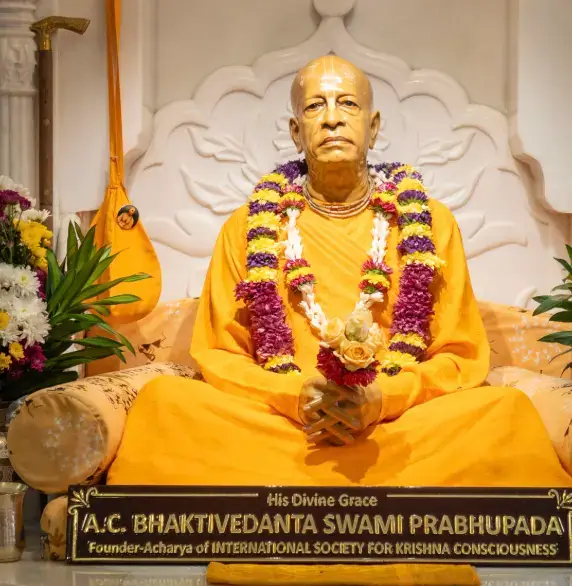
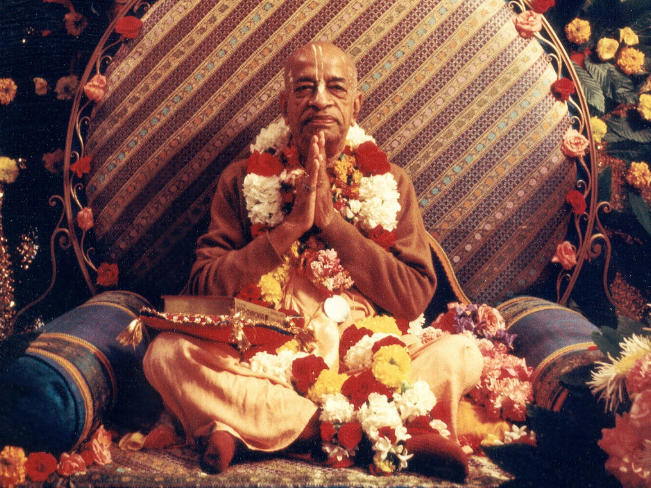
Gratitude to His Divine Grace A.C. Bhaktivedanta Swami Srila Prabhupada
We offer our humble obeisances at the lotus feet of our founder-acharya, His Divine Grace A.C. Bhaktivedanta Swami Srila Prabhupada, without whose causeless mercy the priceless prayers, bhajans and sacred literature of the Gaudiya Vaishnava tradition would have remained inaccessible to most of the world. By his herculean preaching efforts, his unparalleled translations and his founding of the International Society for Krishna Consciousness (ISKCON), the holy names, pastimes and instructions of Sri Sri Radha-Krishna and Sri Chaitanya Mahaprabhu are today chanted in every town and village.
nama om vishnu-padaya krishna-preshthaya bhu-tale
srimate bhaktivedanta-svamin iti namine
namas te sarasvate deve gaura-vani-pracharine
nirvishesha-shunyavadi-pashchatya-desha-tarine
All glories to Srila Prabhupada. All glories to the Vaishnava acharyas in the disciplic succession.