
Vrat Katha — The Story of Parama Ekadashi
Source: Skanda Purana — narrated by Lord Sri Krishna to Maharaja Yudhishthira
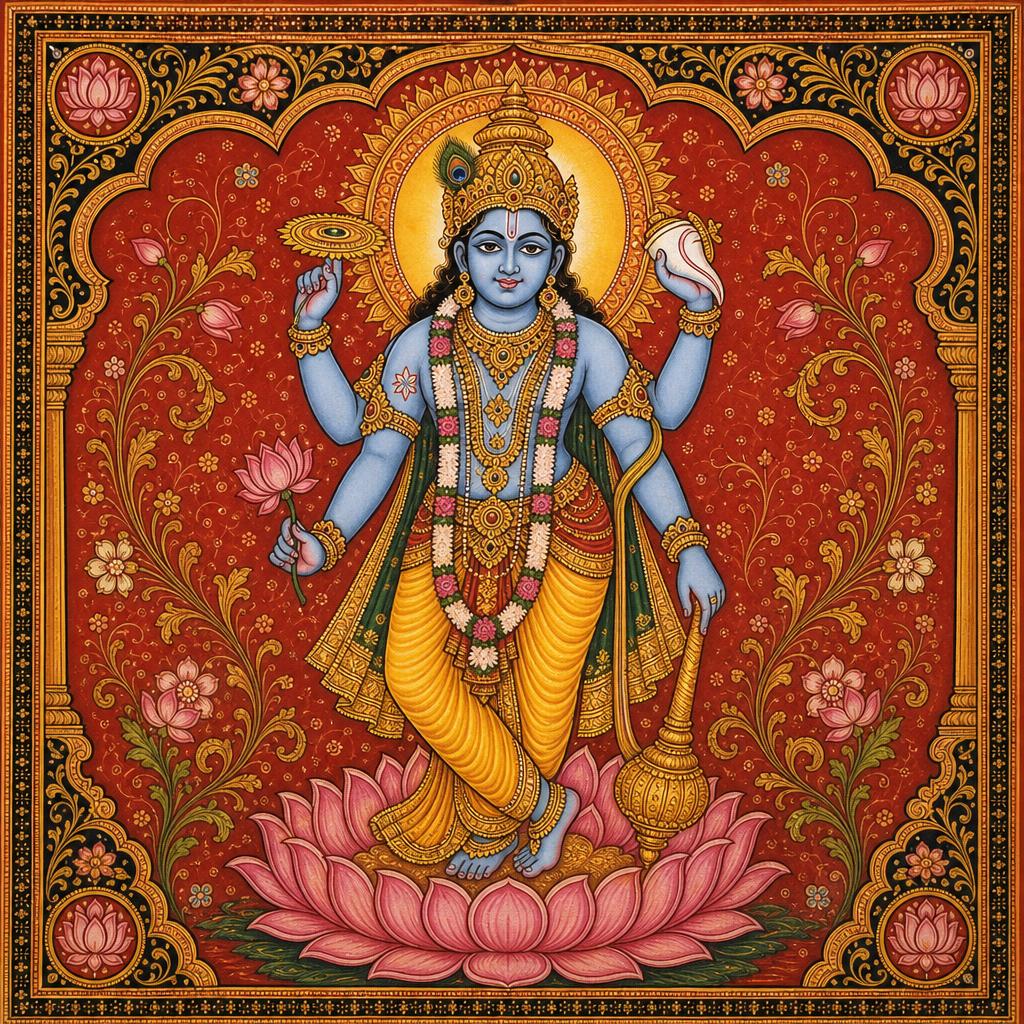
When Maharaja Yudhishthira asked Lord Sri Krishna about the Ekadashi that appears in the dark fortnight of the rare leap-year month of Purushottama, the Lord replied that this day is famously known as Parama Ekadashi. "Parama" means topmost — and the Lord declared that this Ekadashi bestows both worldly necessities and ultimate liberation from the cycle of birth and death. The process of observance is the same as the Padmini Ekadashi of the bright fortnight: one should worship Lord Hari with undivided love and devotion.
To illustrate the day's potency, Lord Krishna narrated a beautiful history that He had heard from a great sage in the holy city of Kampilya. In Kampilya lived a learned brahmana named Sumedha together with his exceedingly chaste and devoted wife, Pavitra. On account of past karma, Sumedha was utterly destitute. Even when he begged door to door, he received scarcely a morsel. Pavitra, despite her own hunger, would serve any guest who came to their humble home with her own portion of food. Her lotus-like face never lost its glow, and her affection for her husband never wavered.
One day, lamenting their condition, Sumedha decided to leave home and seek wealth abroad. Pavitra, with folded hands and eyes brimming with tears, gently restrained him. She reminded him of the scriptural truth that present wealth is the fruit of past charity, and that one who has not given in former lives will not gain wealth merely by wandering abroad. "Without you," she pleaded, "I cannot live even a moment. Whatever is destined will come to us here. Please remain with me, and let us be satisfied with what the Lord sends."
Touched by his wife's wisdom, Sumedha remained at home. Soon thereafter, the great sage Kaundinya Muni arrived at their cottage. Sumedha and Pavitra washed his feet, offered him a seat and fed him as best they could. Pavitra then sincerely asked the sage how a person born without the fortune of past charity could yet escape the misery of poverty. The great sage reflected for a moment and revealed a closely-guarded secret: there exists a fast day extremely dear to Lord Hari that nullifies all sins and removes the miseries born of poverty. This day occurs in the dark fortnight of the rare additional month of Purushottama and is called Parama Ekadashi — the topmost day of Lord Vishnu.
Kaundinya Muni explained that this Ekadashi bestows wealth, food grains and finally liberation. The night of Parama Ekadashi is to be passed in jagaran — chanting the glories of the Lord and dancing in ecstasy. The same vow was once observed by Kuvera, who was made the treasurer of the demigods by Lord Shiva; and by King Harishchandra, who recovered his wife and son and his kingdom after observing it. The sage therefore instructed Pavitra and Sumedha to undertake not only the Ekadashi fast itself but the accompanying five-day Pancharatrika vrata from Ekadashi through to Pournami, with bathing, charity to qualified brahmanas, celibacy and reverent worship of Lord Vishnu.
Faithfully following the sage's instructions, Sumedha and Pavitra observed Parama Ekadashi and the Pancharatrika vrata with full devotion. Very soon, a noble prince arrived from the royal palace on the order of Lord Brahma himself. He presented them with a beautiful, fully-furnished house, gifted them an entire village for their maintenance, praised their austerity and returned to his palace. Sumedha and Pavitra enjoyed every facility through the remainder of their lives, and at the end of their bodies they returned to the abode of Lord Vishnu.
Lord Krishna concluded that fasting on Parama Ekadashi is equal in merit to bathing in Pushkara and the Ganga, to giving cows in charity, and to offering oblations to one's forefathers at Gaya. Among all months the leap month of Purushottama is supreme; among all the fasts of that month, Parama and Padmini Ekadashis together with the Pancharatrika vrata destroy all sins. "O Yudhishthira," the Lord said, "this rare human birth is meant for accumulating spiritual merit and at last attaining liberation. Therefore, by all means, observe this auspicious Parama Ekadashi." The Pandavas observed this vow exactly as Krishna instructed, and ultimately returned home, back to Godhead.
Spiritual Significance
Parama Ekadashi belongs to the rare Purushottama (Adhik) Masa — the leap month inserted every 32–33 months to align the lunar and solar calendars. Srila Prabhupada and the previous acharyas teach that any devotional activity performed during this month is multiplied many times over; the Ekadashis of this month — Padmini in the bright fortnight and Parama in the dark fortnight — are considered the topmost fasts of the entire year. Observing Parama Ekadashi is said to grant the combined merit of all the regular Ekadashis of the year.
Benefits of Observing Parama Ekadashi
- ✦Destruction of poverty-related miseries and removal of the karmic causes of want.
- ✦Equal merit to bathing in Pushkara, Ganga and visiting all places of pilgrimage.
- ✦Combined effect of all the year's Ekadashis when observed together with Padmini Ekadashi.
- ✦Pleases Lord Vishnu as Purushottama — the supreme purifier.
- ✦Frees the devotee from the influence of the Yamadutas at the time of death and grants entry to Vaikuntha.
How to Observe
- Rise before brahma-muhurta, bathe, and take a sincere vow (sankalpa) at sunrise to observe the fast for the pleasure of Sri Krishna.
- Abstain from all grains, beans, lentils and pulses for the full Ekadashi tithi.
- Increase japa of the Hare Krishna mahamantra and reading of Bhagavad-gita and Srimad-Bhagavatam.
- Offer tulasi leaves and manjaris at the lotus feet of Sri Vishnu / Sri Krishna.
- Stay awake the night of Ekadashi in kirtan, hari-katha and remembrance of the Lord (jagaran).
- Break the fast (parana) on Dvadashi morning within the prescribed Parana window only.
What to Avoid
- All grains and pulses (chawal, gehun, dal, rajma, chana, etc.).
- Sleeping during the day, gossip, fault-finding and offences to Vaishnavas.
- Onion, garlic, mushrooms and any tamasic foods.
- Breaking the fast outside the Parana window, which scripturally nullifies the merit.
Recommended Bhajans & Prayers
Frequently Asked Questions — Parama Ekadashi
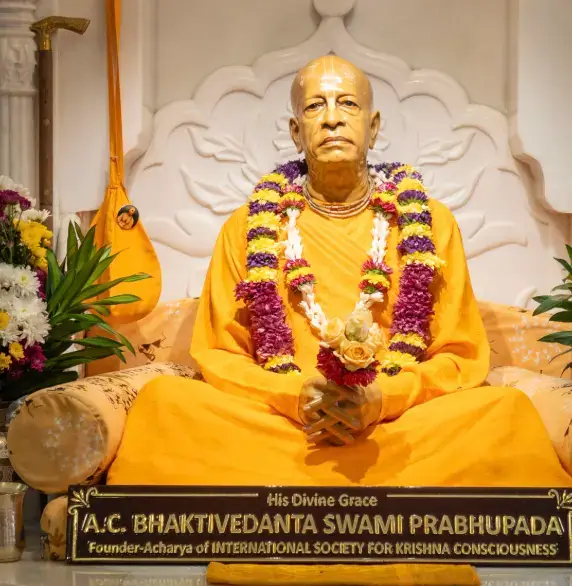
Gratitude to His Divine Grace A.C. Bhaktivedanta Swami Srila Prabhupada
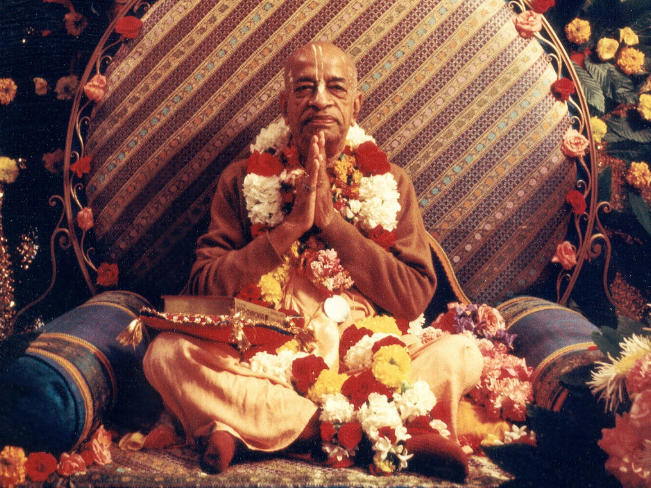
We offer our humble obeisances at the lotus feet of our founder-acharya, His Divine Grace A.C. Bhaktivedanta Swami Srila Prabhupada, without whose causeless mercy the priceless prayers, bhajans and sacred literature of the Gaudiya Vaishnava tradition would have remained inaccessible to most of the world. By his herculean preaching efforts, his unparalleled translations and his founding of the International Society for Krishna Consciousness (ISKCON), the holy names, pastimes and instructions of Sri Sri Radha-Krishna and Sri Chaitanya Mahaprabhu are today chanted in every town and village.
nama om vishnu-padaya krishna-preshthaya bhu-tale
srimate bhaktivedanta-svamin iti namine
namas te sarasvate deve gaura-vani-pracharine
nirvishesha-shunyavadi-pashchatya-desha-tarine
All glories to Srila Prabhupada. All glories to the Vaishnava acharyas in the disciplic succession.