
Vrat Katha — The Story of Saphala Ekadashi
Source: Brahma-vaivarta Purana — narrated by Lord Sri Krishna to Maharaja Yudhishthira
When Maharaja Yudhishthira asked Lord Sri Krishna about the Ekadashi of the dark fortnight of Pausha, the Lord replied: "This is the famous Saphala Ekadashi — the day on which Lord Hari makes every sincere effort of the devotee bear its full and complete fruit. To impress its glory upon you, listen to the story of Lumpaka, the wicked son of King Mahishmata."
In the city of Champavati ruled the pious King Mahishmata. He had five sons; four of them were noble and dharmic, but the eldest, Lumpaka, was utterly fallen. He was addicted to every form of sense gratification, robbed travellers, killed animals, defiled holy places and brought shame upon his royal family. Despite his father's many efforts to correct him, Lumpaka would not reform. Finally the king, with grief in his heart, banished him from the kingdom.
Lumpaka fled to the deep forest. There he continued his sinful life, surviving by hunting, by stealing from travellers and by violence. The forest near him contained an ancient banyan tree which the local sages worshipped as a manifestation of Lord Vasudeva. Beneath this tree, by some chance, Lumpaka happened to take shelter on the night of Dashami in the month of Pausha. The cold of that winter night was so severe that, although he tried, he could not sleep. He spent the entire night shivering, miserable, unable to even rise from where he sat under the tree.
When dawn broke he could neither stand nor walk; the cold had paralysed him. He had not eaten for many hours. Throughout that entire Saphala Ekadashi day he sat helpless under the sacred banyan tree of Lord Vasudeva. By chance, in his weakness, he plucked some of the tree's fallen fruits and laid them as if in offering before the tree, half-praying — perhaps for the first time in his life — to whichever god dwelt there. "If any divine being is here," he said weakly, "let these fruits be Your offering, and let me somehow live."
That night was a second jagaran. Lumpaka, unable to rise, sat all night before the tree of Lord Vasudeva. He had unintentionally fasted, unintentionally offered, and unintentionally kept vigil — the three pillars of an Ekadashi vrata. The next morning a transformation came over him. He felt a strange tenderness in his heart; old impulses fell silent; he wept for the first time in years. From that day his entire nature was changed. He became gentle, dharmic, devoted to Lord Vishnu. He returned to his father's kingdom in repentance. King Mahishmata, overjoyed, embraced him and restored him to the throne; and Lumpaka ruled for many years as a most pious king before, at the end of life, attaining the spiritual world.
Lord Krishna concluded: "O Yudhishthira, if an unintentional Saphala Ekadashi can transform the most fallen Lumpaka into a saintly king, what cannot a sincere observance accomplish? Saphala Ekadashi makes fruitful every effort of the devotee — material as well as spiritual. Even hearing this katha grants the merit of a Rajasuya yajna and the result of giving away a thousand cows in charity."
Spiritual Significance
Saphala Ekadashi is observed in Pausha — the coldest part of the Vaishnava year — and its very name ('saphala' = fruitful, successful) is its blessing: that whatever sincere endeavour the devotee undertakes in the new year ahead may bear its full and proper fruit through the mercy of Sri Hari. It is also a powerful day for those struggling with addiction or destructive habits, as Lumpaka's transformation illustrates.
Benefits of Observing Saphala Ekadashi
- ✦Makes every sincere endeavour — material and spiritual — bear its full fruit.
- ✦Transforms even the most fallen heart, as shown in the story of Lumpaka.
- ✦Merit equal to a Rajasuya yajna and the gift of a thousand cows.
- ✦Removes the karmic causes of repeated failure and bad habits.
- ✦Hearing the katha alone brings tangible benefit by the Lord's mercy.
How to Observe
- Rise early, bathe, take sankalpa to fast for Lord Vishnu's pleasure and for the success of one's spiritual life.
- Abstain from grains and pulses for the full tithi.
- Offer fresh fruits (the symbol of this Ekadashi) to Lord Vishnu, along with tulasi.
- Worship Lord Vishnu beneath or before an image of the sacred banyan tree if possible.
- Chant the Hare Krishna mahamantra and read the Bhagavad-gita.
- Stay awake the night in kirtan.
- Break the fast on Dvadashi morning within the Parana window.
What to Avoid
- All grains and pulses.
- Hunting, intoxicants, violence and any sinful indulgence (the very faults Lumpaka had to give up).
- Onion, garlic, mushrooms and tamasic foods.
- Sleeping during the day, gossip and offences to Vaishnavas.
- Breaking the fast outside the Parana window.
Recommended Bhajans & Prayers
Frequently Asked Questions — Saphala Ekadashi
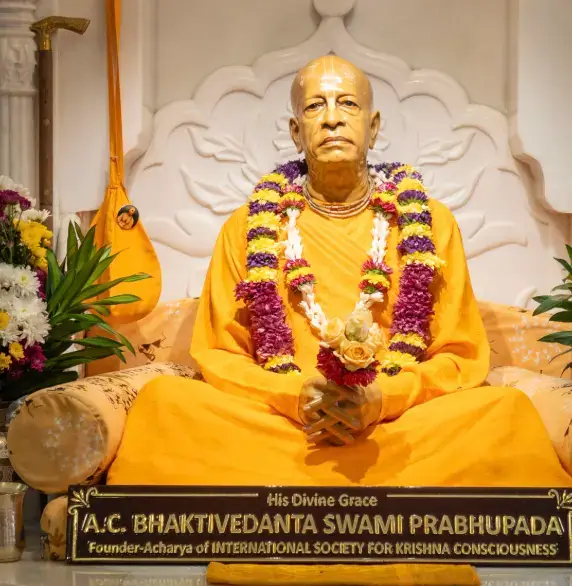
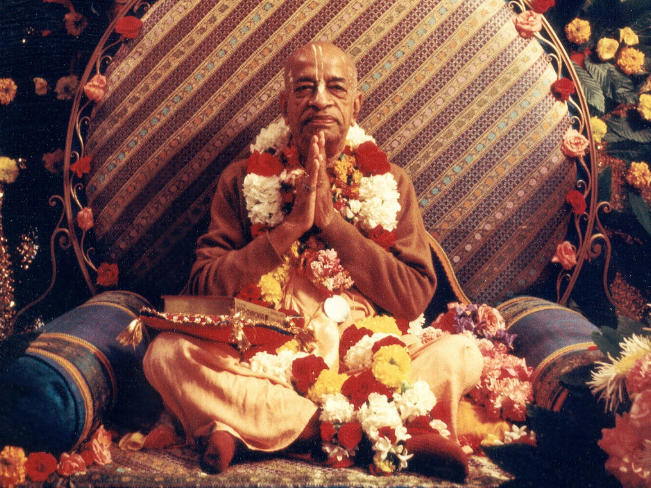
Gratitude to His Divine Grace A.C. Bhaktivedanta Swami Srila Prabhupada
We offer our humble obeisances at the lotus feet of our founder-acharya, His Divine Grace A.C. Bhaktivedanta Swami Srila Prabhupada, without whose causeless mercy the priceless prayers, bhajans and sacred literature of the Gaudiya Vaishnava tradition would have remained inaccessible to most of the world. By his herculean preaching efforts, his unparalleled translations and his founding of the International Society for Krishna Consciousness (ISKCON), the holy names, pastimes and instructions of Sri Sri Radha-Krishna and Sri Chaitanya Mahaprabhu are today chanted in every town and village.
nama om vishnu-padaya krishna-preshthaya bhu-tale
srimate bhaktivedanta-svamin iti namine
namas te sarasvate deve gaura-vani-pracharine
nirvishesha-shunyavadi-pashchatya-desha-tarine
All glories to Srila Prabhupada. All glories to the Vaishnava acharyas in the disciplic succession.