Jaya Radha Madhava
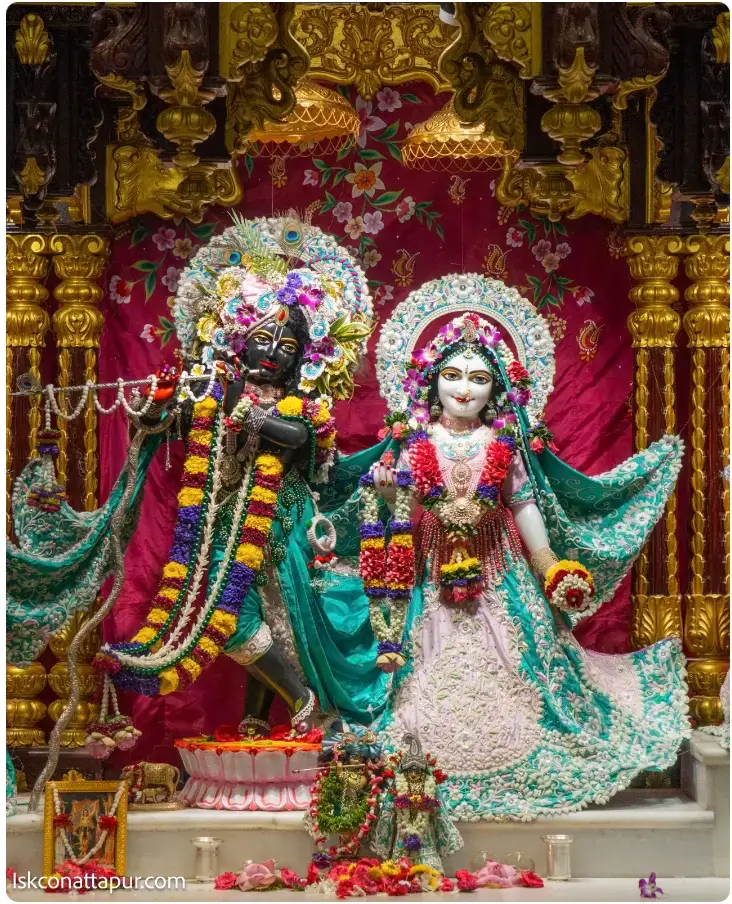
Glorification of the divine couple Sri Radha and Krishna
About Jaya Radha Madhava
Jaya Radha Madhava is composed by Srila Bhaktivinoda Thakura (1838–1914), the celebrated Gaudiya Vaishnava acharya whose writings revived pure devotional philosophy in 19th-century Bengal. The bhajan describes the transcendental pastimes of Sri Radha and Krishna in the sacred forests of Vrindavana, presenting the Lord through a cascade of intimate names: Madhava (the husband of the goddess of fortune), Kunja-bihari (one who enjoys pastimes in the forest groves), Gopi-jana-vallabha (the beloved of all the gopis), Giri-vara-dhari (the lifter of Govardhana Hill).
In ISKCON temples worldwide, Jaya Radha Madhava is sung every morning before the Srimad-Bhagavatam class — a tradition established by Srila Prabhupada himself, who had a deep personal attachment to this bhajan. Srila Prabhupada explained that opening the Bhagavatam class with this song establishes the correct devotional mood (bhava) for hearing the scripture — the mood of Vrindavana, of Radha and Krishna's eternal loving relationship, which is the ultimate subject matter of the Bhagavatam's Tenth Canto. He said that by singing this bhajan before class, the assembled devotees are mentally transported to Vrindavana and can receive the Bhagavatam's teachings in the proper spiritual consciousness.
The bhajan also holds a special place because it is one of the few devotional songs in ISKCON's morning program that describes the divine couple together — addressing both Radha and Madhava from the very first line. The Gaudiya Vaishnava tradition holds that Krishna is most completely understood as Radha-Krishna — the divine couple whose love for each other is the highest expression of spiritual reality. Jaya Radha Madhava begins precisely there, with the joyful exclamation of their names in union.
Sanskrit Verses
Verse 1
jaya rādhā-mādhava kuñja-bihārī gopi-jana-vallabha giri-vara-dhārī yaśodā-nandana braja-jana-rañjana yamunā-tīra-vana-cārī
Verse 2
kadamba-kānana-divyāṅga rādhikā-ramaṇa-smera-mukha-paṅkaja nanda-nandana vraja-vara-nāgara gokula-rañjana kānā
Verse 3
jaya jaya gopāla jaya jaya gopāla jaya jaya gopāla gopāla gopāla yaśodā-nandana braja-jana-rañjana yamunā-tīra-vana-cārī
Translation
1) Glory to Rādhā and Mādhava (Kṛṣṇa), who wander in the groves of Vṛndāvana. He is the beloved of the gopīs, the holder of Govardhana Hill, the son of Mother Yaśodā who gives pleasure to all the residents of Vraja, and who wanders in the forests on the banks of the Yamunā.
2) He enjoys pastimes in the divine kadamba forest. His form is transcendental and He enjoys pastimes with Śrīmatī Rādhārāṇī. His beautiful lotus face is always smiling. He is the son of Nanda Mahārāja, the hero of Vraja, and the one who gives pleasure to all the residents of Gokula.
3) All glories to Gopāla, all glories to Gopāla! All glories, all glories to Gopāla! He is the son of Mother Yaśodā who gives pleasure to all the residents of Vraja and who wanders in the forests on the banks of the Yamunā.
The Significance of This Bhajan
Srila Bhaktivinoda Thakura wrote Jaya Radha Madhava as a vehicle for transporting the mind to Vrindavana — the eternal spiritual abode where Krishna performs His most intimate pastimes. In the Gaudiya Vaishnava philosophy, the highest form of devotion is madhurya-rasa, the sweet conjugal relationship between Radha and Krishna and between Krishna and His cowherd devotees. The names strung together in this bhajan — Kunja-bihari (who wanders the forest groves), Yamuna-tira-vana-cari (who roams the forests on the Yamuna's bank) — each evoke a specific image of Krishna in His most intimate, accessible form as the darling of Vrindavana, not as the distant cosmic creator.
The third verse's joyful refrain — jaya jaya gopala, jaya jaya gopala, jaya jaya gopala gopala gopala — is structurally different from the first two verses and functions as a jubilant acclamation, a burst of pure devotional joy. Srila Prabhupada loved to sing this section with energy and feeling, and devotees recall how he would elongate the word "Gopala" with great affection. The name Gopala means "protector of the cows" and also "protector of the senses" — it describes Krishna in His most approachable pastoral form, tending His cows with love on the banks of the Yamuna.
Singing Jaya Radha Madhava daily before the Bhagavatam class serves a precise spiritual function: it establishes the rasa (spiritual emotion) appropriate for hearing about Krishna. The Bhagavatam's tenth canto — the Vrindavana pastimes — can only be truly understood in a mood of love, not scholarly detachment. By singing about the same Vrindavana, the same Yamuna bank, and the same divine couple that the Bhagavatam describes, the devotees align their consciousness with the scripture's subject matter before a single verse is read.
Vrindavana — The Eternal Abode
The Vrindavana described in Jaya Radha Madhava is not merely a village in Mathura district, Uttar Pradesh — though that sacred place of pilgrimage does exist in the material world. The Srimad-Bhagavatam and the writings of the Six Goswamis of Vrindavana describe an eternal, transcendental Vrindavana that is the original spiritual realm, the personal abode of Radha and Krishna. The kadamba forests, the Yamuna river, Govardhana Hill, and the forest groves (kunjas) mentioned in this bhajan all refer to features of this eternal realm. When a devotee meditates on these images while chanting, they are not imagining a material landscape but recollecting a spiritual reality.
Srila Prabhupada explained that the highest aspiration in the Gaudiya Vaishnava tradition is to one day enter this eternal Vrindavana as a servant of the divine couple. Every name in Jaya Radha Madhava is a meditation on that destination: Radha-Madhava (the divine couple), Giri-vara-dhari (the protector who lifts Govardhana), Braja-jana-ranjana (the delight of Vraja's people). By calling these names with feeling each morning, the sincere devotee is not merely performing a ritual — they are expressing their desire to reach the source of all these transcendental glories.
Spiritual Significance
Jaya Radha Madhava is sung in every ISKCON temple every morning before the Srimad-Bhagavatam class — a tradition established personally by Srila Prabhupada, who had deep love for this bhajan. Composed by Srila Bhaktivinoda Thakura, it glorifies Krishna through His intimate Vrindavana names and establishes the devotional mood of love for the divine couple before the day's scripture study begins.
Scriptural Source & Tradition
Composed by Srila Bhaktivinoda Thakura and published in his Gitavali. The imagery draws directly from the Srimad-Bhagavatam Tenth Canto — particularly Krishna's pastimes in Vrindavana, the lifting of Govardhana, the rasa dance, and the descriptions of the sacred Yamuna riverbank.
Commentary from the Acharyas
Srila Prabhupada personally demonstrated his affection for this bhajan by introducing it into the ISKCON morning program. He explained that Bhaktivinoda Thakura's descriptions of Vrindavana in this song help the devotee maintain "the higher taste" — the experience that makes material enjoyment feel pale by comparison.
The name Kunja-bihari — "one who enjoys pastimes in the forest groves" — holds a special place in Gaudiya Vaishnava philosophy. The kunjas are the intimate forest bowers of Vrindavana where Radha and Krishna meet in their most confidential loving pastimes. Simply hearing this name, the Goswamis write, can transport the advanced devotee to those transcendental groves.
When to Sing / Chant
- Every morning before the Srimad-Bhagavatam class in ISKCON
- During evening arati and kirtan programs
- As a meditation on Vrindavana for beginning practitioners
- During Kartika (Damodara month) gatherings
Benefits for the Devotee
- Establishes the devotional mood of Vrindavana before scripture study
- Meditates on Radha and Krishna simultaneously — the highest Gaudiya Vaishnava meditation
- Connects daily practice to the unbroken ISKCON temple tradition worldwide
- Simple, beautiful melody accessible even to first-time visitors
- Each name reveals a different facet of Krishna's transcendental personality
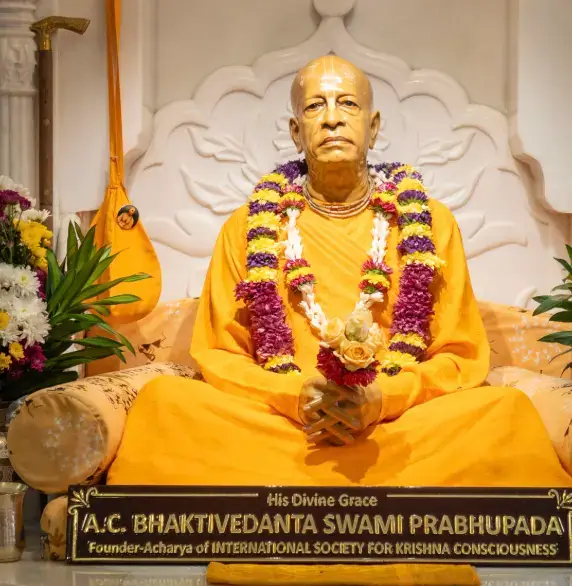
Gratitude to His Divine Grace A.C. Bhaktivedanta Swami Srila Prabhupada
We offer our humble obeisances at the lotus feet of our founder-acharya, His Divine Grace A.C. Bhaktivedanta Swami Srila Prabhupada, without whose causeless mercy the priceless prayers, bhajans and sacred literature of the Gaudiya Vaishnava tradition would have remained inaccessible to most of the world. By his herculean preaching efforts, his unparalleled translations and his founding of the International Society for Krishna Consciousness (ISKCON), the holy names, pastimes and instructions of Sri Sri Radha-Krishna and Sri Chaitanya Mahaprabhu are today chanted in every town and village.
nama om vishnu-padaya krishna-preshthaya bhu-tale
srimate bhaktivedanta-svamin iti namine
namas te sarasvate deve gaura-vani-pracharine
nirvishesha-shunyavadi-pashchatya-desha-tarine
All glories to Srila Prabhupada. All glories to the Vaishnava acharyas in the disciplic succession.
Spiritual Significance
Scriptural Source & Tradition
Commentary from the Acharyas
When to Sing / Chant
Benefits for the Devotee
Gratitude to His Divine Grace A.C. Bhaktivedanta Swami Srila Prabhupada
We offer our humble obeisances at the lotus feet of our founder-acharya, His Divine Grace A.C. Bhaktivedanta Swami Srila Prabhupada, without whose causeless mercy the priceless prayers, bhajans and sacred literature of the Gaudiya Vaishnava tradition would have remained inaccessible to most of the world. By his herculean preaching efforts, his unparalleled translations and his founding of the International Society for Krishna Consciousness (ISKCON), the holy names, pastimes and instructions of Sri Sri Radha-Krishna and Sri Chaitanya Mahaprabhu are today chanted in every town and village.
nama om vishnu-padaya krishna-preshthaya bhu-tale
srimate bhaktivedanta-svamin iti namine
namas te sarasvate deve gaura-vani-pracharine
nirvishesha-shunyavadi-pashchatya-desha-tarine
All glories to Srila Prabhupada. All glories to the Vaishnava acharyas in the disciplic succession.