Mangalacharana Prayers — Invocation Before Spiritual Discourse
Mangalacharana (माङ्गलाचरण) means "auspicious invocation" — the sequence of prayers recited before beginning any spiritual discourse, scripture study, or satsang in the Gaudiya Vaishnava tradition. These prayers seek the blessings of the guru-parampara, Sri Krishna, Srimati Radharani, and the Vaishnavas, asking permission to discuss transcendental subjects. Below is the complete Mangalacharana sequence with each prayer's Sanskrit, meaning, and scriptural source.
Also available in:
In the Gaudiya Vaishnava tradition, transcendental knowledge is never self-manufactured — it descends intact through the guru-parampara, the disciplic succession of realized teachers stretching back to Sri Krishna Himself. Before speaking or hearing on sacred subjects, the devotee therefore pauses to seek permission and blessings from that chain of teachers, from the Lord and His eternal associates, and from the Vaishnavas. This is not mere formality: it is an act of humility that empties the heart of pride and prepares it to receive the message as it is.
This same Mangalacharana sequence is recited before every Bhagavad Gita and Srimad Bhagavatam class in satsangs and temples worldwide, including our own weekly sessions. By offering these prayers first, both the speaker and the listeners acknowledge that the real teacher is the parampara, and that we are but humble servants asking to be used as instruments in the transmission of pure devotion.
Guru Pranam — oṁ ajñāna-timirāndhasya
oṁ ajñāna-timirāndhasya jñānāñjana-śalākayā cakṣur unmīlitaṁ yena tasmai śrī-gurave namaḥ
Srila Rupa Goswami Pranam — śrī-caitanya-mano-'bhīṣṭaṁ
śrī-caitanya-mano-'bhīṣṭaṁ sthāpitaṁ yena bhū-tale svayaṁ rūpaḥ kadā mahyaṁ dadāti sva-padāntikam
Parampara Obeisances — vande 'haṁ śrī-guroḥ
vande 'haṁ śrī-guroḥ śrī-yuta-pada-kamalaṁ śrī-gurūn vaiṣṇavāṁś ca śrī-rūpaṁ sāgrajātaṁ saha-gaṇa-raghunāthānvitaṁ taṁ sa-jīvam sādvaitaṁ sāvadhūtaṁ parijana-sahitaṁ kṛṣṇa-caitanya-devaṁ śrī-rādhā-kṛṣṇa-pādān saha-gaṇa-lalitā-śrī-viśākhānvitāṁś ca
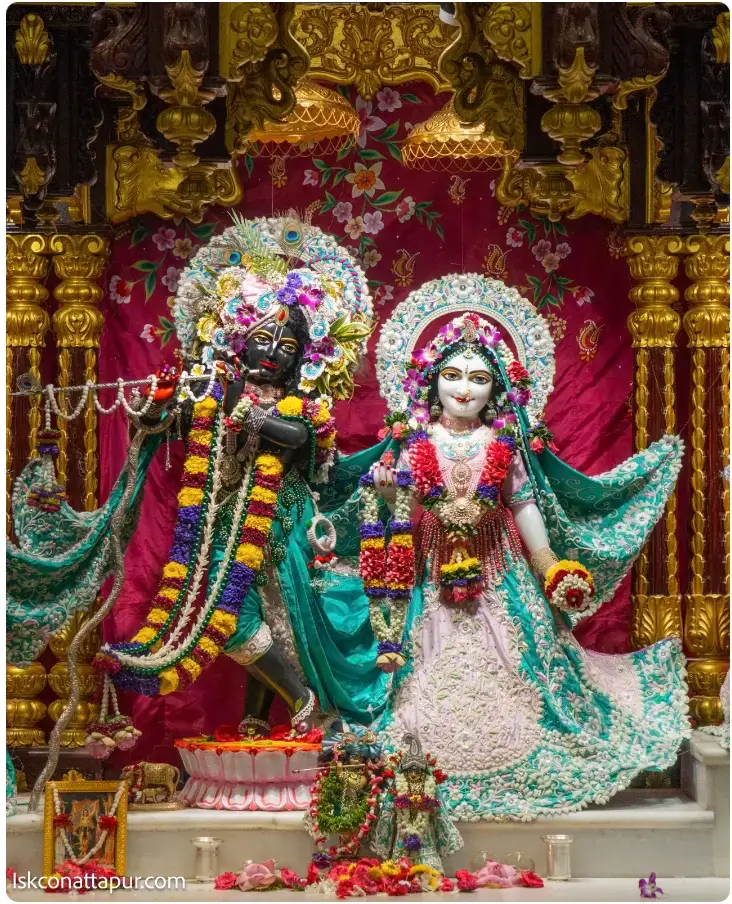
Krishna Pranam — he kṛṣṇa karuṇā-sindho
he kṛṣṇa karuṇā-sindho dīna-bandho jagat-pate gopeśa gopikā-kānta rādhā-kānta namo 'stu te
Sri Radha Pranam — tapta-kāñcana-gaurāṅgi
tapta-kāñcana-gaurāṅgi rādhe vṛndāvaneśvari vṛṣabhānu-sute devi praṇamāmi hari-priye
Panca-Tattva Mantra — śrī-kṛṣṇa-caitanya
śrī-kṛṣṇa-caitanya prabhu-nityānanda śrī-advaita gadādhara śrīvāsādi-gaura-bhakta-vṛnda
Hare Krishna Maha-Mantra
hare kṛṣṇa hare kṛṣṇa kṛṣṇa kṛṣṇa hare hare hare rāma hare rāma rāma rāma hare hare
Invocation — oṁ namo bhagavate vāsudevāya (×3)
oṁ namo bhagavate vāsudevāya
Srimad Bhagavatam 1.2.4 — nārāyaṇaṁ namaskṛtya
Srimad Bhagavatam 1.2.4nārāyaṇaṁ namaskṛtya naraṁ caiva narottamam devīṁ sarasvatīṁ vyāsaṁ tato jayam udīrayet
Srimad Bhagavatam 1.2.18 — naṣṭa-prāyeṣv abhadreṣu
Srimad Bhagavatam 1.2.18naṣṭa-prāyeṣv abhadreṣu nityaṁ bhāgavata-sevayā bhagavaty uttama-śloke bhaktir bhavati naiṣṭhikī
Srimad Bhagavatam 1.8.21 — kṛṣṇāya vāsudevāya
Srimad Bhagavatam 1.8.21kṛṣṇāya vāsudevāya devakī-nandanāya ca nanda-gopa-kumārāya govindāya namo namaḥ
Srimad Bhagavatam 1.8.22 — namaḥ paṅkaja-nābhāya
Srimad Bhagavatam 1.8.22namaḥ paṅkaja-nābhāya namaḥ paṅkaja-māline namaḥ paṅkaja-netrāya namas te paṅkajāṅghraye
Sri Chaitanya Pranam — namo mahā-vadānyāya
Chaitanya Charitamrita, Madhya-lila 19.53namo mahā-vadānyāya kṛṣṇa-prema-pradāya te kṛṣṇāya kṛṣṇa-caitanya-nāmne gaura-tviṣe namaḥ
Go-Brahmana Pranam — namo brahmaṇya-devāya
Vishnu Purana 1.19.65namo brahmaṇya-devāya go-brāhmaṇa-hitāya ca jagad-dhitāya kṛṣṇāya govindāya namo namaḥ
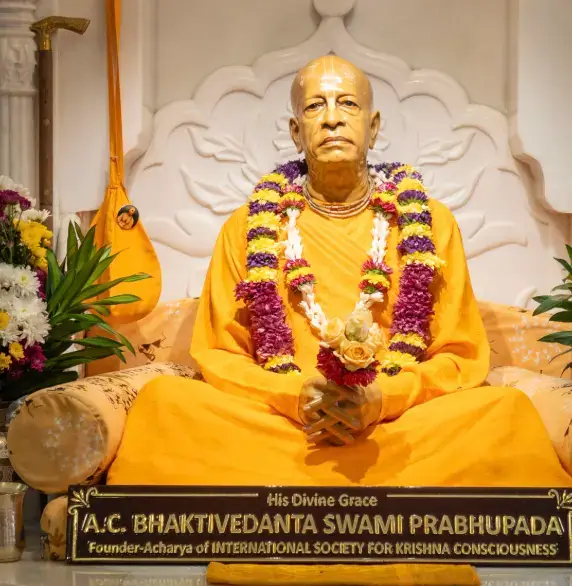
Srila Prabhupada Pranati — nama oṁ viṣṇu-pādāya
nama oṁ viṣṇu-pādāya kṛṣṇa-preṣṭhāya bhū-tale śrīmate bhaktivedānta-svāmin iti nāmine
Prabhupada Pranati II — namas te sārasvate deve
namas te sārasvate deve gaura-vāṇī-pracāriṇe nirviśeṣa-śūnyavādi-pāścātya-deśa-tāriṇe
Panca-Tattva Glorification — jaya śrī-kṛṣṇa-caitanya
jaya śrī-kṛṣṇa-caitanya prabhu nityānanda śrī-advaita gadādhara śrīvāsādi-gaura-bhakta-vṛnda
Closing Maha-Mantra
hare kṛṣṇa hare kṛṣṇa kṛṣṇa kṛṣṇa hare hare hare rāma hare rāma rāma rāma hare hare
Meanings & Translations
1. Guru Pranam
I was born in the darkest ignorance, and my spiritual master opened my eyes with the torch of knowledge. I offer my respectful obeisances unto him.
2. Srila Rupa Goswami Pranam
When will Srila Rupa Goswami Prabhupada, who has established within this material world the mission to fulfill the desire of Lord Chaitanya, give me shelter under his lotus feet?
3. Parampara Obeisances
I offer my respectful obeisances unto the lotus feet of my spiritual master and of all the preceptors on the path of devotional service; unto all the Vaishnavas and the six Goswamis — Srila Rupa Goswami, Srila Sanatana Goswami, Raghunatha dasa Goswami, Jiva Goswami and their associates. I offer my respectful obeisances unto Advaita Acharya Prabhu, Sri Nityananda Prabhu, Sri Chaitanya Mahaprabhu and all His devotees headed by Srivasa Thakura. I then offer my respectful obeisances unto the lotus feet of Lord Krishna, Srimati Radharani and all the gopis, headed by Lalita and Visakha.
4. Krishna Pranam
O my dear Krishna, ocean of mercy, You are the friend of the distressed and the source of creation. You are the master of the cowherd men and the lover of the gopis, especially Radharani. I offer my respectful obeisances unto You.
5. Sri Radha Pranam
I offer my respects to Radharani, whose bodily complexion is like molten gold and who is the Queen of Vrindavana. You are the daughter of King Vrishabhanu, and You are very dear to Lord Krishna.
6. Vaishnava Pranam
I offer my respectful obeisances unto all the Vaishnava devotees of the Lord. They can fulfill the desires of everyone, just like desire trees, and they are full of compassion for the fallen souls.
7. Panca-Tattva Mantra
I offer my obeisances to Sri Krishna Chaitanya, Prabhu Nityananda, Sri Advaita, Gadadhara, Srivasa and all the devotees of Lord Chaitanya.
8. Hare Krishna Maha-Mantra
9. Invocation (×3)
I offer my respectful obeisances unto the Supreme Personality of Godhead, Vasudeva. This invocation opens the Srimad Bhagavatam itself and is recited three times before class.
10. SB 1.2.4
Before reciting this Srimad Bhagavatam, which is the very means of conquest, one should offer respectful obeisances unto the Personality of Godhead, Narayana, unto Nara-narayana Rishi, the supermost human being, unto mother Sarasvati, the goddess of learning, and unto Srila Vyasadeva, the author.
Source: Srimad Bhagavatam 1.2.4
11. SB 1.2.18
By regular attendance in classes on the Bhagavatam and by rendering of service to the pure devotee, all that is troublesome to the heart is almost completely destroyed, and loving service unto the Personality of Godhead is established as an irrevocable fact.
Source: Srimad Bhagavatam 1.2.18
12. SB 1.8.21
Let me offer my respectful obeisances unto the Lord, who has become the son of Vasudeva, the pleasure of Devaki, the boy of Nanda and the other cowherd men of Vrindavana, and the enlivener of the cows and the senses.
Source: Srimad Bhagavatam 1.8.21
13. SB 1.8.22
My respectful obeisances are unto You, O Lord, whose abdomen is marked with a depression like a lotus flower, who are always decorated with garlands of lotus flowers, whose glance is as cool as the lotus, and whose feet are engraved with lotuses.
Source: Srimad Bhagavatam 1.8.22
14. Sri Chaitanya Pranam
O most munificent incarnation! You are Krishna Himself appearing as Sri Krishna Chaitanya Mahaprabhu. You have assumed the golden color of Srimati Radharani, and You are widely distributing pure love of Krishna. We offer our respectful obeisances unto You.
Source: Chaitanya Charitamrita, Madhya-lila 19.53
15. Go-Brahmana Pranam
I offer my repeated obeisances unto Lord Krishna, who is always worshiped by qualified brahmanas and is very dear to them. He is always concerned with the welfare of the cows, the brahmanas and the whole world, and He gives pleasure to the cows, land and senses.
Source: Vishnu Purana 1.19.65
16. Srila Prabhupada Pranati
I offer my respectful obeisances unto His Divine Grace A.C. Bhaktivedanta Swami Prabhupada, who is very dear to Lord Krishna, having taken shelter at His lotus feet.
17. Prabhupada Pranati II
Our respectful obeisances are unto you, O spiritual master, servant of Sarasvati Goswami. You are kindly preaching the message of Lord Chaitanya and delivering the Western countries, which are filled with impersonalism and voidism.
18. Panca-Tattva Glorification
All glories to Sri Krishna Chaitanya, Prabhu Nityananda, Sri Advaita, Gadadhara, and all the devotees of Lord Gauranga headed by Srivasa.
19. Closing Maha-Mantra
Spiritual Significance
The heart of Mangalacharana is the parampara principle: knowledge of the Absolute is not acquired by mental speculation but received through the descending chain of teachers — evaṁ paramparā-prāptam (Bhagavad Gita 4.2). By first bowing to the guru-parampara, the reciter aligns himself with this current of realized wisdom, so that what is spoken carries the potency of the previous acharyas rather than the limited opinion of the individual.
Scriptural Source & Tradition
The prayers are drawn directly from scripture and the acharyas: oṁ ajñāna-timirāndhasya from the Gautamiya-tantra; the invocation and verses nārāyaṇaṁ namaskṛtya (SB 1.2.4), naṣṭa-prāyeṣv abhadreṣu (SB 1.2.18) and the two Kunti prayers (SB 1.8.21–22) from the Srimad Bhagavatam itself; namo mahā-vadānyāya from the Chaitanya Charitamrita (Madhya 19.53); and the pranati verses to Srila Prabhupada composed by his disciples in the line of Srila Bhaktisiddhanta Sarasvati Thakura.
Commentary from the Acharyas
Humility is the doorway to transcendental knowledge. Sri Chaitanya Mahaprabhu taught that one should be more humble than a blade of grass to constantly chant the holy name. The Mangalacharana enacts this mood: before claiming any right to speak of Krishna, the devotee offers respects to everyone above him — guru, Vaishnavas, the Lord and His associates. Only in that surrendered posture does the meaning of the scripture truly reveal itself in the heart.
When to Sing / Chant
- Before every Bhagavad Gita and Srimad Bhagavatam class
- At the start of satsang, kirtan and scripture reading in temples worldwide
- Before personal study, japa or family worship at home
- Whenever one wishes to invoke auspiciousness upon a spiritual endeavour
Benefits for the Devotee
- Invokes the blessings of the guru-parampara upon the discourse
- Cultivates humility, the prerequisite for receiving knowledge
- Purifies the atmosphere and the hearts of speaker and listeners
- Connects the class to the unbroken current of realized wisdom
- Establishes the correct devotional mood before hearing and chanting
Continue exploring
Gratitude to His Divine Grace A.C. Bhaktivedanta Swami Srila Prabhupada
We offer our humble obeisances at the lotus feet of our founder-acharya, His Divine Grace A.C. Bhaktivedanta Swami Srila Prabhupada, without whose causeless mercy the priceless prayers, bhajans and sacred literature of the Gaudiya Vaishnava tradition would have remained inaccessible to most of the world. By his herculean preaching efforts, his unparalleled translations and his founding of the International Society for Krishna Consciousness (ISKCON), the holy names, pastimes and instructions of Sri Sri Radha-Krishna and Sri Chaitanya Mahaprabhu are today chanted in every town and village.
nama om vishnu-padaya krishna-preshthaya bhu-tale
srimate bhaktivedanta-svamin iti namine
namas te sarasvate deve gaura-vani-pracharine
nirvishesha-shunyavadi-pashchatya-desha-tarine
All glories to Srila Prabhupada. All glories to the Vaishnava acharyas in the disciplic succession.