Also available in:
Read the scriptures on Vedabase:
ISKCON Mangal Arti — Complete Morning Arti Prayers
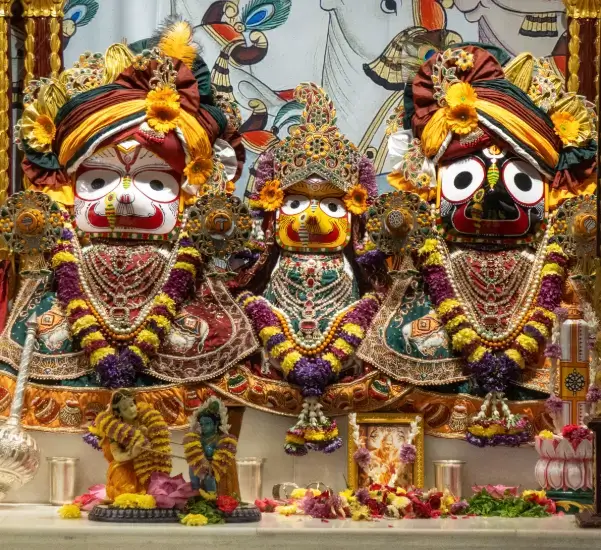
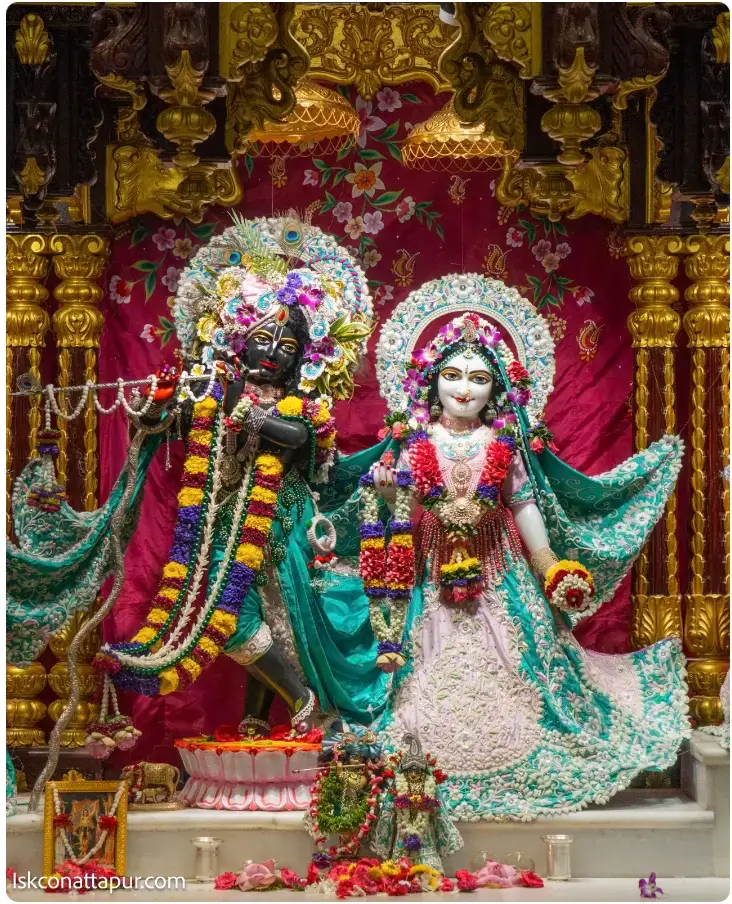
Mangal Arti (Mangala Arati) is the most auspicious devotional service offered to the Deities of Sri Sri Radha-Krishna in the early hours of Brahma Muhurta. This single page consolidates all the prayers traditionally sung during ISKCON Mangal Arti — Sri Sri Gurvastakam, Hari Haraye Namah, Narasimha Arti, Tulsi Aarti, and Sri Siksastakam — along with the Ten Offenses to the Holy Name, so devotees can perform their morning sadhana from one convenient place.
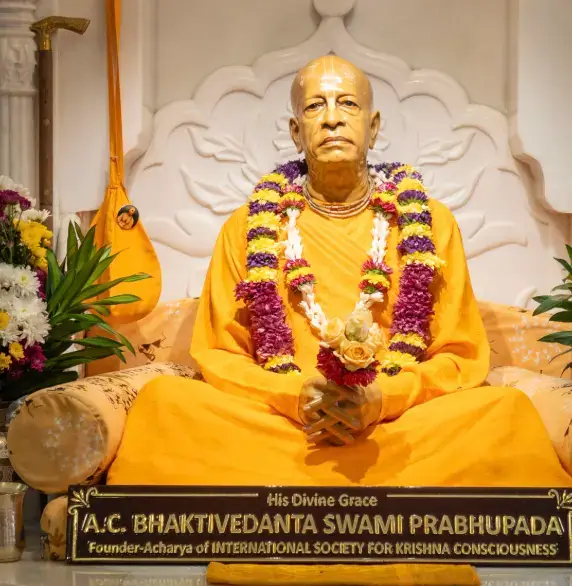
With humble gratitude to His Divine Grace A.C. Bhaktivedanta Swami Srila Prabhupada, the Founder-Acharya of ISKCON, by whose causeless mercy these timeless prayers have reached every corner of the world.
On This Page
Sri Sri Gurvastakam
Glories of the Spiritual Master by Srila Vishvanatha Chakravarti Thakura — sung first during ISKCON Mangal Arti.
Verse 1
saḿsāra-dāvānala-līḍha-loka- trāṇāya kāruṇya-ghanāghanatvam prāptasya kalyāṇa-guṇārṇavasya vande guroḥ śrī-caraṇāravindam
Verse 2
mahāprabhoḥ kīrtana-nṛtya-gīta- vāditra-mādyan-manaso rasena romāñca -kampāśru-tarańga-bhājo vande guroḥ śrī-caraṇāravindam
Verse 3
śrī-vigrahārādhana-nitya-nānā- śṛńgāra-tan-mandira-mārjanādau yuktasya bhaktāḿś ca niyuñjato 'pi vande guroḥ śrī-caraṇāravindam
Verse 4
catur-vidha-śrī-bhagavat-prasāda- svādv-anna-tṛptān hari-bhakta-sańghān kṛtvaiva tṛptiḿ bhajataḥ sadaiva vande guroḥ śrī-caraṇāravindam
Verse 5
śrī-rādhikā-mādhavayor apāra- mādhurya-līlā guṇa-rūpa-nāmnām prati-kṣaṇāsvādana-lolupasya vande guroḥ śrī-caraṇāravindam
Verse 6
nikuñja-yūno rati-keli-siddhyai yā yālibhir yuktir apekṣaṇīyā tatrāti-dākṣyād ati-vallabhasya vande guroḥ śrī-caraṇāravindam
Verse 7
sākṣād-dharitvena samasta-śāstrair uktas tathā bhāvyata eva sadbhiḥ kintu prabhor yaḥ priya eva tasya vande guroḥ śrī-caraṇāravindam
Verse 8
yasya prasādād bhagavat-prasādo yasyāprasādān na gatiḥ kuto 'pi dhyāyan stuvaḿs tasya yaśas tri-sandhyaḿ vande guroḥ śrī-caraṇāravindam
Pranati Mantras
Offering obeisances to Srila Prabhupada and the Panca-tattva, sung after Sri Sri Gurvastakam and before Hari Haraye Namah.
Srila Prabhupada Pranati
Verse 1
nama om vishnu-padaya krishna-preshthaya bhu-tale srimate bhaktivedanta-svamin iti namine
Verse 2
namas te sarasvate deve gaura-vani-pracarine nirvisesha-sunyavadi-pascatya-desa-tarine
Panca-tattva Maha-mantra
Mantra
(jaya) sri-krishna-caitanya prabhu nityananda sri-advaita gadadhara srivasadi-gaura-bhakta-vrinda Hare Krishna Hare Krishna Krishna Krishna Hare Hare Hare Rama Hare Rama Rama Rama Hare Hare
Hari Haraye Namah Krsna Yadavaya Namah
Sung after the Pranati Mantras during Mangal Arti. (IVCC)
Verse 1
hari haraye namaḥ kṛṣṇa yādavāya namaḥ yādavāya mādhavāya keśavāya namaḥ
Verse 2
gopāla govinda rāma śrī-madhusūdana giridhārī gopīnātha madana-mohana
Verse 3
śrī-caitanya-nityānanda śrī-advaita-sītā hari guru vaiṣṇaba bhāgavata gītā
Verse 4
śrī-rūpa sanātana bhaṭṭa-raghunātha śrī-jīva gopāla-bhaṭṭa dāsa-raghunātha
Narasimha Arti
Prayers to Lord Nrsimhadeva, the protector of devotees.
Sanskrit Verses
Verse 1
namas te narasiḿhāya prahlādāhlāda-dāyine hiraṇyakaśipor vakṣaḥ- śilā-ṭańka-nakhālaye
Verse 2
ito nṛsiḿhaḥ parato nṛsiḿho yato yato yāmi tato nṛsiḿhaḥ bahir nṛsiḿho hṛdaye nṛsiḿho nṛsiḿham ādiḿ śaraṇaḿ prapadye
Verse 3
tava kara-kamala-vare nakham adbhuta-śṛńgaḿ dalita-hiraṇyakaśipu-tanu-bhṛńgam keśava dhṛta-narahari-rūpa jaya jagadīśa hare
Tulsi Aarti
Worship of Srimati Tulasi Devi, most dear to Lord Krishna.
Sri Tulasi Pranama Mantra
Pranama Mantra
vṛndāyai tulasī-devyai priyāyai keśavasya ca viṣṇu-bhakti-prade devī satya vatyai namo namaḥ
Sri Tulasi-Aarti
Verse 1
namo namah tulasi krishna-preyasi namo namah radha-krishna-seva pabo ei abilashi
Verse 2
ye tomara sarana loy, tara vancha purna hoy kripa kori' koro tare vrindavana-vasi
Verse 3
mora ei abhilasha, vilasa kunje dio vasa nayana heribo sada yugala-rupa-rasi
Verse 4
ei nivedana dhara, sakhira anugata koro seva-adhikara diye koro nija dasi
Verse 5
dina krishna-dase koy, ei yena mora hoy sri-radha-govinda-preme sada yena bhasi
Sri Tulasi Pradakshina Mantra
Pradakshina Mantra
yāni kāni ca pāpāni brahma-hatyādikāni ca tāni tāni praṇaśyanti pradakṣiṇaḥ pade pade
Sri Siksastakam
The eight prayers composed by Lord Sri Caitanya Mahaprabhu.
Sanskrit Verses
Verse 1
ceto-darpana-marjanam bhava-maha-davagni-nirvapanam shreyah-kairava-chandrika-vitaranam vidya-vadhu-jivanam anandambudhi-vardhanam prati-padam purnamritaswadanam sarvatma-snapanam param vijayate sri-krishna-sankirtanam
Translation: Glory to the Sri Krishna Sankirtana, which cleanses the heart of all the dust accumulated for years and extinguishes the fire of conditional life, of repeated birth and death. This sankirtana movement is the prime benediction for humanity at large because it spreads the rays of the benediction moon. It is the life of all transcendental knowledge. It increases the ocean of transcendental bliss, and it enables us to fully taste the nectar for which we are always anxious.
Verse 2
namnam akari bahudha nija-sarva-shaktis tatrarpita niyamitah smarane na kalah etadrishi tava kripa bhagavan mamapi durdaivam idrisham ihajani nanuragaha
Translation: O my Lord, Your holy name alone can render all benediction to living beings, and thus You have hundreds and millions of names like Krishna and Govinda. In these transcendental names You have invested all Your transcendental energies. There are not even hard and fast rules for chanting these names. O my Lord, out of kindness You enable us to easily approach You by Your holy names, but I am so unfortunate that I have no attraction for them.
Verse 3
trinad api sunichena taror api sahishnuna amanina manadena kirtaniyah sada harih
Translation: One should chant the holy name of the Lord in a humble state of mind, thinking oneself lower than the straw in the street; one should be more tolerant than a tree, devoid of all sense of false prestige and should be ready to offer all respect to others. In such a state of mind one can chant the holy name of the Lord constantly.
Verse 4
na dhanam na janam na sundarim kavitam va jagad-isha kamaye mama janmani janmanishvare bhavatad bhaktir ahaituki twayi
Translation: O almighty Lord, I have no desire to accumulate wealth, nor do I desire beautiful women, nor do I want any number of followers. I only want Your causeless devotional service birth after birth.
Verse 5
ayi nanda-tanuja kinkaram patitam mam vishame bhavambudhau kripaya tava pada-pankaja- sthita-dhuli-sadrisham vichintaya
Translation: O son of Maharaja Nanda [Krishna], I am Your eternal servitor, yet somehow or other I have fallen into the ocean of birth and death. Please pick me up from this ocean of death and place me as one of the atoms at Your lotus feet.
Verse 6
nayanam galad-ashru-dharaya vadanam gadgada-ruddhaya gira pulakair nichitam vapuh kada tava nama-grahane bhavishyati
Translation: O my Lord, when will my eyes be decorated with tears of love flowing constantly when I chant Your holy name? When will my voice choke up, and when will the hairs of my body stand on end at the recitation of Your name?
Verse 7
yugayitam nimeshena chakshusha pravrishayitam shunyayitam jagat sarvam govinda-virahena me
Translation: O Govinda! Feeling Your separation, I am considering a moment to be like twelve years or more. Tears are flowing from my eyes like torrents of rain, and I am feeling all vacant in the world in Your absence.
Verse 8
ashlishya va pada-ratam pinashtu mam adarshanan marma-hatam karotu va yatha tatha va vidadhatu lampato mat-prana-nathas tu sa eva naparah
Translation: I know no one but Krishna as my Lord, and He shall remain so even if He handles me roughly by His embrace or makes me brokenhearted by not being present before me. He is completely free to do anything and everything, for He is always my worshipful Lord unconditionally.
HARE KRISHNA HARE KRISHNA KRISHNA KRISHNA HARE HARE HARE RAMA HARE RAMA RAMA RAMA HARE HARE
The Ten Offenses to the Holy Name
Important guidelines from the Padma Purana compiled by Srila Vyasadeva.
Offense 1
To blaspheme the devotees who have dedicated their lives for propagating the holy name of the Lord.
Offense 2
To consider the names of demigods like Lord Shiva or Lord Brahma to be equal to or independent of the name of the Lord Vishnu.
Offense 3
To disobey the orders of the spiritual master.
Offense 4
To blaspheme the vedic scriptures or scriptures in pursuance to the vedic version.
Offense 5
To consider the glories of chanting Hare Krishna to be an imagination.
Offense 6
To give some interpretations to the holy name of the Lord.
Offense 7
To commit sinful activities on the strength of the holy name.
Offense 8
To consider the chanting of Hare Krishna as one of the auspicious ritualistic activities which are offered in the Vedas as frutive activities (Karma kanda).
Offense 9
To instruct a faithless person about the glories of the holy name.
Offense 10
To not have complete faith in the chanting of the holy name and to maintain material attachments, even after understanding so many instructions on this matter. It is also an offense to be inattentive while chanting.
Every devotee who claims to be a Vaishnava must guard against these offenses in order to quickly achieve the desired success — Krishna Prema.
Read the scriptures on Vedabase:
Spiritual Significance
Scriptural Source & Tradition
Commentary from the Acharyas
When to Sing / Chant
Benefits for the Devotee
Gratitude to His Divine Grace A.C. Bhaktivedanta Swami Srila Prabhupada
We offer our humble obeisances at the lotus feet of our founder-acharya, His Divine Grace A.C. Bhaktivedanta Swami Srila Prabhupada, without whose causeless mercy the priceless prayers, bhajans and sacred literature of the Gaudiya Vaishnava tradition would have remained inaccessible to most of the world. By his herculean preaching efforts, his unparalleled translations and his founding of the International Society for Krishna Consciousness (ISKCON), the holy names, pastimes and instructions of Sri Sri Radha-Krishna and Sri Chaitanya Mahaprabhu are today chanted in every town and village.
nama om vishnu-padaya krishna-preshthaya bhu-tale
srimate bhaktivedanta-svamin iti namine
namas te sarasvate deve gaura-vani-pracharine
nirvishesha-shunyavadi-pashchatya-desha-tarine
All glories to Srila Prabhupada. All glories to the Vaishnava acharyas in the disciplic succession.