Vaishnava tradition · ISKCON-aligned · Researched and written by Himanshu Dixit
Hare Krishna Maha Mantra — Lyrics, Meaning & How to Chant
The supreme mantra of Kali Yuga — in Sanskrit, Devanagari, and English — with its word-by-word meaning, scriptural source, and complete instructions for japa and kirtan.
The Hare Krishna Maha Mantra
हरे कृष्ण हरे कृष्ण कृष्ण कृष्ण हरे हरे
हरे राम हरे राम राम राम हरे हरे
Hare Kṛṣṇa Hare Kṛṣṇa Kṛṣṇa Kṛṣṇa Hare Hare
Hare Rāma Hare Rāma Rāma Rāma Hare Hare
Hare Krishna Hare Krishna Krishna Krishna Hare Hare
Hare Rama Hare Rama Rama Rama Hare Hare
Kali-Santarana Upanishad · 16 names · 32 syllables
What is the Hare Krishna Maha Mantra?
The Hare Krishna Maha Mantra is a 16-word, 32-syllable Vedic prayer. It is composed entirely of three names of the Supreme Lord: Hare, Krishna, and Rama. These names appear in a specific arrangement of eight pairs, each pair a direct address to the Lord and His divine energy.
Unlike many Vedic mantras that require specific initiation, an auspicious time, or a formal setting, the Hare Krishna Maha Mantra can be chanted by anyone, at any time, in any place. This universality is itself part of its teaching: the mercy of the Lord's holy name is freely available, without barrier of caste, education, age, or nationality.
The mantra's source is the Kali-Santarana Upanishad (also written Kali-Saṇṭāraṇa Upanishad), a Upanishad of the Krishna Yajur Veda. In this short but profound scripture, the sage Narada asks Lord Brahma: "How can people cross over the negative influence of Kali-yuga?" Brahma answers by giving the Hare Krishna Maha Mantra as the supreme means — the yuga-dharma, the prescribed spiritual practice for this age.
Word-by-Word Meaning
| Word | Sanskrit Root | Meaning |
|---|---|---|
| Hare | Hara / Harā | Vocative form of Hara — a name of Radharani, the divine feminine energy (shakti) of Lord Krishna. It is a direct call to that energy: "O Radharani, O energy of the Lord!" Also meaning "He who takes away (all material suffering)." |
| Krishna | Kṛṣ + ṇa | "The all-attractive one." From the Sanskrit root kṛṣ(to attract). Lord Krishna attracts all living entities — through His beauty, wisdom, power, wealth, renunciation, and fame — to Himself. |
| Rama | Ram | "The reservoir of all pleasure" — referring both to Lord Balarama (Krishna's elder brother) and to the name Rama in its sense of the supreme source of joy. Some Vaishnava commentators also understand it as referring to Lord Ramachandra. |
The mantra contains 16 names total (Hare appears 8 times, Krishna 4 times, Rama 4 times), arranged in eight pairs. Each pair is a complete invocation.
The Yuga-Dharma — Why This Mantra for This Age
Vedic cosmology describes four great ages (yugas), each with its prescribed spiritual practice. In Satya-yuga, the prescribed method was deep meditation (dhyana); in Treta-yuga, it was elaborate Vedic fire sacrifices (yajna); in Dvapara-yuga, it was elaborate deity worship (puja). In the current age — Kali-yuga — the prescribed practice is the congregational chanting of the holy name of the Lord (sankirtana).
The Srimad Bhagavatam (12.3.51-52) states this directly:
"Although Kali-yuga is an ocean of faults, there is still one good quality about this age: simply by chanting the Hare Krishna Maha Mantra, one can become free from material bondage and be promoted to the transcendental kingdom."
— Srimad Bhagavatam 12.3.51 · Srila Prabhupada translation
In the 15th century CE, Sri Chaitanya Mahaprabhu appeared in Navadvipa (present-day West Bengal) and demonstrated this teaching personally — spending His entire life chanting, dancing, and distributing the holy name throughout India. The ISKCON movement, founded by Srila A.C. Bhaktivedanta Swami Prabhupada in 1966, carries this same mission worldwide.
How to Chant — Japa and Kirtan
Japa — Personal Chanting
Japa is the individual, meditative chanting of the mantra, typically done on a japa mala — a string of 108 beads made from Tulasi wood. Chanting the full Maha Mantra once on each bead completes one "round" of 108 repetitions. Srila Prabhupada gave his initiated students a minimum vow of 16 rounds per day (1,728 full repetitions of the Hare Krishna Maha Mantra).
For beginners: start with a number you can commit to daily — 4 rounds, or even 1 round. Consistency over quantity is the key. The mantra should be chanted clearly, with each word audible to your own ears. Avoid chanting too fast (rushing is a form of inattention) or silently (the sound vibration is the mantra's essence).
Japa is best done in the early morning hours (brahma-muhurta — the period 1.5 hours before sunrise), after bathing, in a clean, quiet space. Many devotees chant facing their home altar or a picture of their spiritual master.
Kirtan — Congregational Chanting
Kirtan is the sung, responsive chanting of the Maha Mantra in a group. A lead singer sings the mantra to a musical accompaniment (harmonium, mridanga drum, kartals — small cymbals), and everyone present responds. This call-and-response format naturally draws participants into full attention and creates a joyful, communal atmosphere.
Kirtan is considered the highest form of devotional practice in the Chaitanya Vaishnava tradition, because it embodies congregational chanting — the very definition of sankirtana (sam = fully, kirtana = glorification). Even a few minutes of attentive kirtan, the texts say, purifies the heart and the surrounding environment.
At KC Zenithians
KC Zenithians hosts regular kirtan sessions in Hyderabad. Members chant Japa together during morning programmes and sing kirtan at evening gatherings. If you are new to chanting and would like to join, you are welcome at any session — no prior experience is needed.
Srila Prabhupada's Words on the Maha Mantra
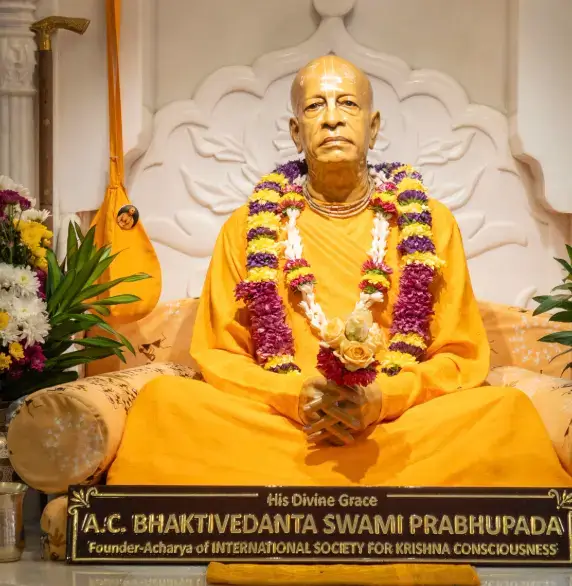
Srila A.C. Bhaktivedanta Swami Prabhupada (1896–1977), the founder-acharya of ISKCON, made the Hare Krishna Maha Mantra known worldwide. His instructions on the mantra, drawn from the Vaishnava scriptural tradition, remain the guide for practitioners in this lineage:
"Please chant Hare Krishna and be happy."
— Srila Prabhupada, often repeated
"The chanting of the Hare Krishna mantra is directly enacted from the spiritual platform, and thus this sound vibration surpasses all lower strata of consciousness — namely sensual, mental and intellectual. There is no need, therefore, to understand the language of the mantra, nor is there any need for mental speculation or intellectual adjustment for chanting this Maha-mantra. It is automatic, from the spiritual platform."
— Srila Prabhupada, Introduction to Teachings of Lord Chaitanya
Prabhupada emphasized that the mantra's potency lies not in understanding its linguistic meaning but in the act of calling out the Lord's names with sincerity. The names are non-different from the Lord Himself — chanting them is direct contact with the Supreme.
Frequently Asked Questions
Q1What is the Hare Krishna Maha Mantra?
The Hare Krishna Maha Mantra is a 16-word, 32-syllable Vedic prayer composed of three names of the Supreme Lord: Hare (the energy of Hari, referring to Radharani), Krishna (the all-attractive), and Rama (the reservoir of pleasure, referring also to Balarama). Its full form is: 'Hare Krishna Hare Krishna Krishna Krishna Hare Hare / Hare Rama Hare Rama Rama Rama Hare Hare.' This mantra is the prescribed spiritual practice (yuga-dharma) for the current age of Kali.
Q2Where does the Hare Krishna Maha Mantra come from?
The Hare Krishna Maha Mantra is found in the Kali-Santarana Upanishad, a minor Upanishad of the Krishna Yajur Veda. In this scripture, the sage Narada Muni asks Lord Brahma how humanity can cross over the negative effects of Kali-yuga, and Brahma responds by giving this mantra — the Hare Krishna Maha Mantra — as the supreme means.
Q3What does Hare Krishna mean word by word?
'Hare' is the vocative form of Hara, a name of Radharani — the feminine energy (shakti) of the Supreme Lord. It is a plea to that divine energy for engagement in the Lord's service. 'Krishna' means 'the all-attractive one' — He who attracts everything and everyone to Himself. 'Rama' means 'the reservoir of all pleasure' and also refers to Lord Balarama, Krishna's elder brother. By chanting these names, the devotee directly addresses the Lord and His energy.
Q4How do I chant the Hare Krishna Maha Mantra properly?
Japa (personal chanting): Use a string of 108 japa beads (a japa mala). Chanting the full mantra once on each bead completes one round of 108 repetitions. Srila Prabhupada instructed initiated devotees to chant at least 16 rounds daily (1,728 repetitions of the full mantra). Chant clearly, so each word is audible to your own ears. Kirtan (congregational chanting): The mantra is sung responsively — a lead singer calls the mantra and everyone responds. Both japa and kirtan are equally effective when done with attention and sincerity.
Q5What are the ten offences to avoid when chanting the Maha Mantra?
The Vaishnava tradition, following the Padma Purana, lists ten offences (nama-aparadhas) that reduce the potency of the holy name: (1) blaspheming devotees of the Lord, (2) considering the Lord and the demigods equal, (3) disobeying the spiritual master, (4) minimizing the authority of Vedic literature, (5) interpreting the holy name as imaginary or allegorical, (6) committing sinful acts on the strength of chanting, (7) giving the holy name to the unfaithful, (8) equating the holy name with other auspicious activities, (9) being inattentive while chanting, (10) keeping material attachments even after understanding all this. Chanting purely, free from these offences, quickly liberates the devotee.
Q6Why is the Hare Krishna Maha Mantra especially recommended for Kali Yuga?
In the age of Kali-yuga (the current age), humanity's life span, intelligence, memory, and willpower are greatly diminished compared to earlier ages. The severe austerities and long meditations prescribed in previous ages are no longer possible. The scriptures — including the Srimad Bhagavatam (12.3.51-52) — declare that the most effective spiritual practice in Kali-yuga is the congregational chanting of the holy names of the Lord (sankirtana). The Hare Krishna Maha Mantra is the form of sankirtana that the Lord Himself, appearing as Sri Chaitanya Mahaprabhu in the 15th century, taught and distributed throughout India.
Q7Can anyone chant the Hare Krishna Maha Mantra?
Yes. The Hare Krishna Maha Mantra requires no initiation, no prior qualification, and no specific age, gender, caste, or background. It is freely available to all. Srila Prabhupada emphasized that this was one of the unique aspects of the Lord's mercy in Kali-yuga: the holy name can be chanted by anyone, anywhere, at any time. Even if one has committed many sins, sincere chanting of the Maha Mantra purifies the heart and gradually brings one to the platform of pure devotion.
Continue exploring